Cat mews edition 8, January/ February
Village in NZ trying to ban all cats
they are still trying to go ahead.
A
small village on the southern coast of New Zealand is planning to
implement a radical plan to protect its native wildlife: ban all
domestic cats.
Under
the initiative, proposed by Environment Southland, cat owners in Omaui
will have to neuter, microchip and register their moggies with local
authorities.
After their pet dies, cat lovers in the community will then not be allowed to get any more.
It
sounds extreme, but it may be something more communities should be
considering: after all, cats are responsible for the death of billions
of birds and mammals each year - and, according to some, it is all our
fault.
Dr. Peter Marra, the head of the Smithsonian Migratory Bird Centre, has authored journals and books on the issue.
Contrary to preconceptions about him, he insists he is not anti-cat or against cat ownership.
"Cats
make wonderful pets - they're spectacular pets! But they shouldn't be
allowed to roam outside - it's a really obvious solution," he told the
BBC.
"We would never let dogs do that. It's about time we treat cats like dogs."
In
Omaui, officials say the measure is justified because cameras have
shown roaming cats preying on birds, insects, and reptiles in the area.
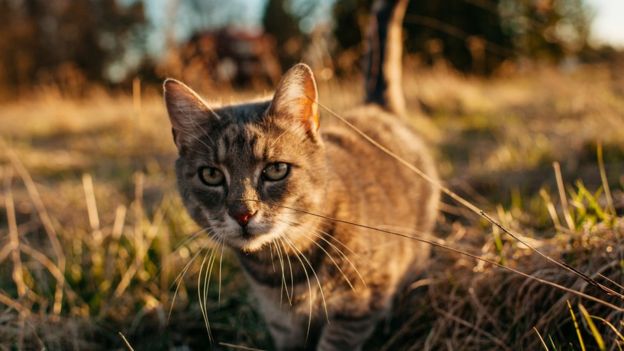
"So
your cat can live out its natural life at Omaui happily doing what it's
doing. But then when it dies, you wouldn't be able to replace
it," bio-security operations manager Ali Meade explained.
Under
the plan, anyone not complying would receive a notice, before officials
would remove the pets - but only as an "absolute last resort".
The
initiative is part of the regional council's proposed regional pest
management plan, which was opened for consultation on Tuesday.
- https://www.bbc.com/news/newsbeat-44885523?intlink_from_url=https://www.bbc.co.uk/news/topics/cvjk7vv0w40t/cats&link_location=live-reporting-story
John
Collins, chairman of the Omaui Land-care Charitable Trust, championed
the ban to protect "high-value" nature reserves there.
'We're not cat haters, but we want our environment to be wildlife-rich," he said, the Otago Daily Times reports.
How big a problem are cats?
The debate about cat populations and local Eco-systems is not unique to Omaui.
Conservation
scientists have long warned about the impact of feral and outdoor cats
on the global ecosystem - and they've been ranked among the 100 worst
non-native invasive species in the world.
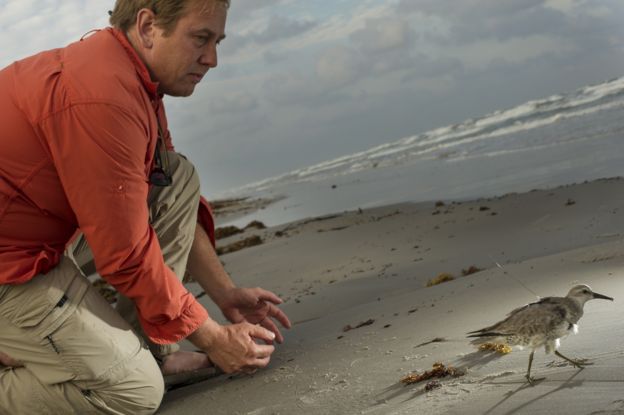
Dr.
Marra says 63 species extinctions around the world are now linked to
the booming cat populations. The problem is exacerbated in areas with
very sensitive eco-systems, like New Zealand.
"It sounds extreme," he says. "But the situation has got out of control."
He
believes cat-lovers around the world need to embrace a "different
mindset" toward the animals. He believes they should be adopted where
possible, then neutered and exercised at home using toys, or in a
controlled environment - for example, on a leash.
"This predicament is not the fault of cats - it's humans' fault," he insists.
Because of their popularity on social media and in memes, the global pet population shows no sign of abating.
"They are just cute - everything about them, which makes this whole thing more difficult."
Accurate
estimates are hard to ascertain, but in the US there are about 86
million pet cats - roughly one in every three households.
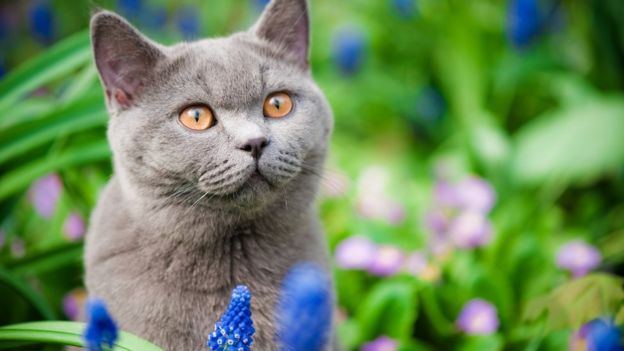
Unquantifiable amounts live stray or feral, meaning huge casualties in the environment.
It is estimated that as many as four billion birds and 22 billion mammals are killed by cats in the US every year.
Even
in the UK, populations are on the decline, and experts blame cats. The
Mammal Society says that about 55 million birds are falling casualty
each year.
'Natural-born killers'
It's
not the first time cats have been painted as a menace in New Zealand - a
country boasting a feline in almost half its households.
They're
a hot issue in Australia too, where feral and outdoor cats are blamed
for millions of native species' deaths every night.
The
nation has been funding grassroots culling initiatives since 2015,
boasts the world's largest cat-proof fence and has even considered
introducing a national curfew for domestic cats.
Councils
and state governments have been taking the cat problem into their own
hands - forcing cats to stay indoors at night, implementing household
quotas and mandatory identification and neutering.
Nevertheless,
initiatives against felines remain controversial. Last year animal
rights groups laid particular scorn at one Queensland local council who
were offering $10 bounties for feral cat scalps.
Nico
Jarvis, a local resident who says her three cats help combat rodents in
her house, compared the proposal to a "police state".
''It's not even regulating people's ability to have a cat. It's saying you can't have a cat,'' she told the Otago Daily Times.
Paw
Justice, a New Zealand-based non-profit that focuses on animal abuse,
posted about the plan on Facebook, questioning the evidence behind it.
Cat-lovers
on the group's Facebook page reacted angrily to the news and pointing
out that poisons, cars, and humans also damage native species.
Local residents have until the end of October to register their submissions to Environment Southland's plan.
Japan cat island.
An
army of feral cats rules a remote island in southern Japan, curling up
in abandoned houses or strutting about in a fishing village that is
overrun with felines outnumbering humans six to one.

/arc-anglerfish-arc2-prod-tronc.s3.amazonaws.com/public/3I3KSZOOR5HOTKMQKH7PFPT6WE.jpg) Cats crowd the harbor on Aoshima Island in the Ehime prefecture in southern Japan
Cats crowd the harbor on Aoshima Island in the Ehime prefecture in southern Japan
The cats of Aoshima are not too picky, surviving on the rice balls, energy bars or potatoes
they cadge off tourists. In the absence of natural predators, they roam the island without
fear.
they cadge off tourists. In the absence of natural predators, they roam the island without
fear.
Not all the residents are admirers, though. One elderly woman shooed the animals away with a stick when they dug up her back garden. Locals are trying to keep the feline
population in check
- at least 10 cats have been neutered.
population in check
- at least 10 cats have been neutered.
Residents haven't taken too kindly to the tourists either. They don't mind them coming but
want to be left in peace.
want to be left in peace.
"If people coming to the island find the cats healing, then I think it's a good thing," said
65-year-old Hidenori Kamimoto, who ekes out a living as a fisherman.
"I just hope that it's done in a way that doesn't become a burden on the people who live
here."
With no restaurants, cars, shops or kiosks selling snacks, Aoshima is no tourist haven.
But cat lovers are not complaining.
But cat lovers are not complaining.
Originally introduced to the mile-long island of Aoshima to deal with mice that
plagued fishermen's boats, the cats stayed on - and multiplied.
plagued fishermen's boats, the cats stayed on - and multiplied.
More
than 120 cats swarm the island with only a handful of humans for
company, mostly pensioners who didn't join the waves of migrants seeking
work in the cities after World War Two.
Catnip and cats?
The substance in catnip that intoxicates cats is Nepetalactone and makes them allhyper.
Cats stretch
If
there were an Olympic event for stretching, cats would win gold.
They're constantly stretching their muscles, likely for many of the same
reasons that people do, experts told Live Science.
The
main reasons? It feels good and increases blood flow, said Andrew Cuff,
a postdoctoral researcher of anatomy at the Royal Veterinary College in
London.
Cats
sleep between 12 and 16 hours a day, about twice as much as people do,
according to Rubin Naiman, a clinical psychologist at the University of
Arizona, as reported by the Huffington Post.
When humans sleep, the brain paralyzes most of the body's muscles to
prevent people from acting out their dreams. The same thing happens to
cats during catnaps, which prevents the cat from sleepwalking off the
sofa or wherever it's snoozing, Cuff said.
Once the cat wakes up, the stretching begins.
"Cats
stretch to get their muscles moving again after periods of inactivity,
whether they've been sitting still or sleeping," Cuff told Live Science.
When
a cat is sleeping or relaxed, its blood pressure drops, Cuff said. The
same is true for people, he added. Stretching can help to reverse that.
"As
you stretch, it activates all of your muscles and increases your blood
pressure, which increases the amount of blood flowing to the muscles and
also to the brain," Cuff said. "This helps wake you up and make you
more alert."
If Your Cat Swats with Its Left Paw, It's Probably Male
When your cat knocks your favorite coffee mug off the counter, does it use its left paw or its right?
There's
no need to sacrifice any drink-ware for the answer; your cat's gender
should tell you enough. According to a small feline-behavior study
published in the journal Animal Behaviour, female cats are significantly
more likely to be right-paw-dominant, while male cats typically favor
their left paws. And while this bit of purr-persnickety trivia might
seem insignificant, your cat's dominant paw may be an indicator of the
animal's well-being, said study author Deborah Wells, a reader at
Queen's University Belfast's School of Psychology.
For
starters: Yes, cats can (and often do) have a dominant paw preference.
When animals favor one side of their body over another, it's known as
laterality, Wells and her colleagues wrote. Laterality also exists in
amphibians, rodents, primates, marsupials, and even whales. [10 Weird
Cat Behaviors Explained]
In
this study, Wells and her colleagues studied paw-preference data from
44 cats (24 male and 20 female) of varying breeds, gathered over three
months by the cats' owners. Unlike in previous feline paw-dominance
studies conducted in lab settings, participating cats were monitored
throughout their daily home lives to see which paw they naturally led
with during several routine behaviors.
Researchers
were most interested in which paw each cat led with when walking
downstairs and stepping over the raised edges of their litter boxes, and
whether the cat favored one side over the other when lying down to
sleep. In addition to this "spontaneous" data, researchers supervised
each cat retrieving treats from a food maze — a spherical tower with
three layers of holes leading to a snack — during several lab trials.
In
the end, 73 percent of cats showed a clear paw preference when reaching
for food, 70 percent showed a preference when stepping downstairs, and
66 percent showed a preference when stepping over the lips of their
litter boxes.
Both
male and female cats showed a dominant paw preference. Males strongly
favored their front left paws, and females strongly favored their front
right paws. (Neither male nor female cats appeared to have preferred
sleeping sides.)
"The
findings point more and more strongly to underlying differences in
the neural architecture of male and female animals," Wells said in
a statement. And while the explanation for this gender-biased behavior
could be as simple as the presence of different hormones in male and
female cats, Wells said a cat's preferred paw might be a strong
indicator of the animal's personality.
"Ambilateral
animals with no preference for one side or the other, and those that
are more inclined to left-limb dominance, for example, seem more flighty
and susceptible to poor welfare than those who lean more heavily
towards right-limb use," Wells said. "We have just discovered that left-limbed dogs, for example, are more pessimistic in their outlook than right-limbed dogs. From a pet owner's perspective, it might be useful to know if an animal is left- or right-limb dominant, as it may help them gauge how vulnerable that individual is to stressful situations."
The new study did not account for the participating cats' stress levels or emotional
welfare, but all of them were judged to be healthy.
The international cat day is the 29th of October where we spend the day celebrating cats.
Cat behavior
Kneading: kneading may just be a way for cats to scent and claim an area — cats have scent glands in the pads of their paws.
Position: high.
When
your cat holds her tail high in the air as she moves about her
territory, she's expressing confidence and contentment. A tail that
sticks straight up signals happiness and a willingness to be friendly.
And watch the tip of an erect tail. A little twitch can mean a
particularly happy moment
Your
cat's tail can tell you about what's going on inside her head. Tails
are good indicators of mood. Take a little time to observe your cat's
behavior and you’ll start to get a feel of the tales the tail tells.
Position: high.
When
your cat holds her tail high in the air as she moves about her
territory, she's expressing confidence and contentment. A tail that
sticks straight up signals happiness and a willingness to be friendly.
And watch the tip of an erect tail. A little twitch can mean a
particularly happy moment.
Position: curved like a question mark.
You
might consider taking a break from your daily business to play with
your cat if you notice a curve in her tail. This tail position often
signals a playful mood and a cat that's ready to share some fun with
you.
Position: low.
Watch
out. A tail positioned straight down can signal aggression. A lower
tail is a very serious mood. However, be aware that certain breeds, such
as Persians, tend to carry their tails low for no particular reason.
Position: tucked away.
A tail curved beneath the body signals fear or submission. Something is making your cat nervous.
Position: swishing tail.
A
tail that sways slowly from side to side usually means your cat is
focused on an object. You might see this tail position right before your
cat pounces on a toy or a kibble of cat food that’s tumbled outside the
food bowl.
Comments
Post a Comment